
Overview

The Cambridge English Skills Test is a modern, computer-based English assessment designed to evaluate language proficiency from A1 to C1+ levels. Available in both General and Business versions, this adaptive test provides fast, reliable results for individuals and organizations seeking to assess English language ability in professional and academic contexts.

Test Format & Structure

The exam consists of four modules that can be taken together or separately, with results typically available within 48 hours (often within 20 minutes). The test uses adaptive technology in Reading and Listening sections, automatically adjusting difficulty based on performance to efficiently determine the candidate's level.

Reading (30-60 minutes)

The reading section is adaptive and includes at least 6 tasks. The test automatically stops once your level has been determined. Question types include:

Shorter Reading Texts:

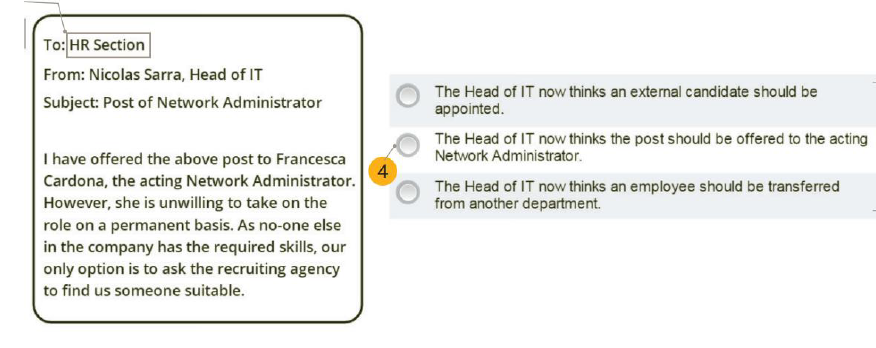
  • Multiple choice questions based on graphs, diagrams, labels, and emails
  • Selecting the best answer from 3-4 options
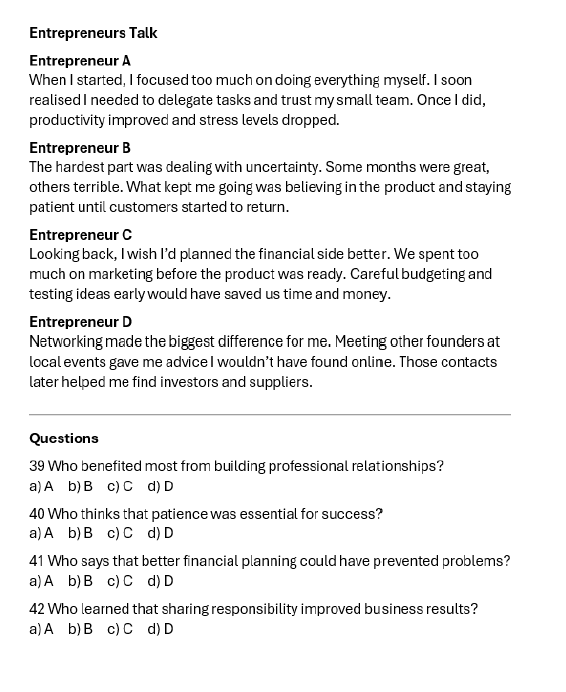
Example of shorter reading text task

Example: Shorter reading text with multiple choice

Longer Reading Texts:

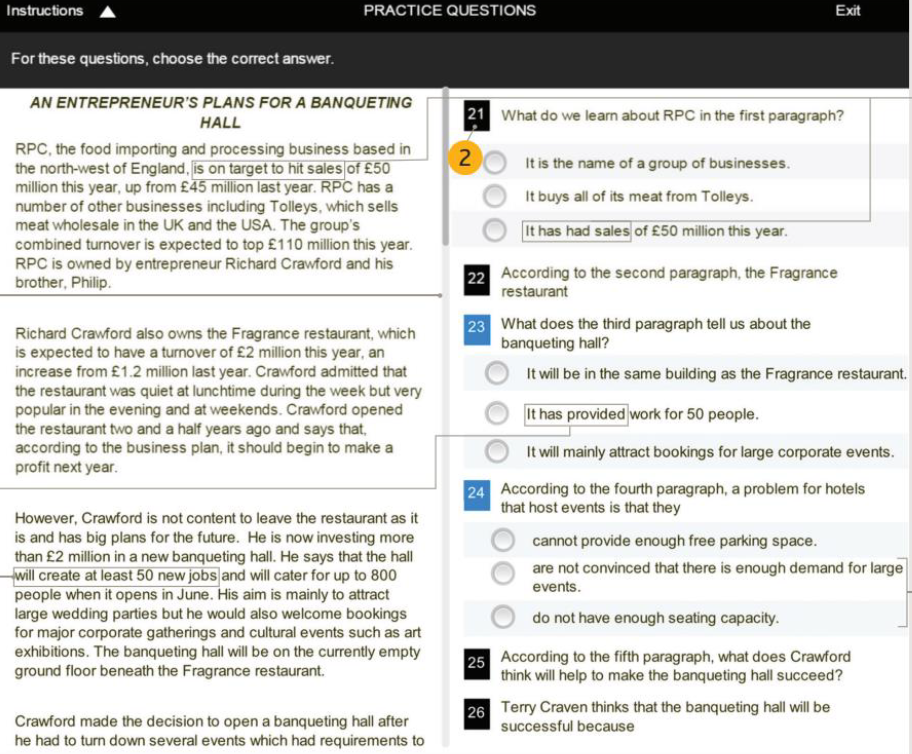
  • Several questions per text, presented in chronological order
  • One question per paragraph assessing comprehension
Example of longer reading text task

Example: Longer reading passage with multiple questions

Gap-Fill Exercises:

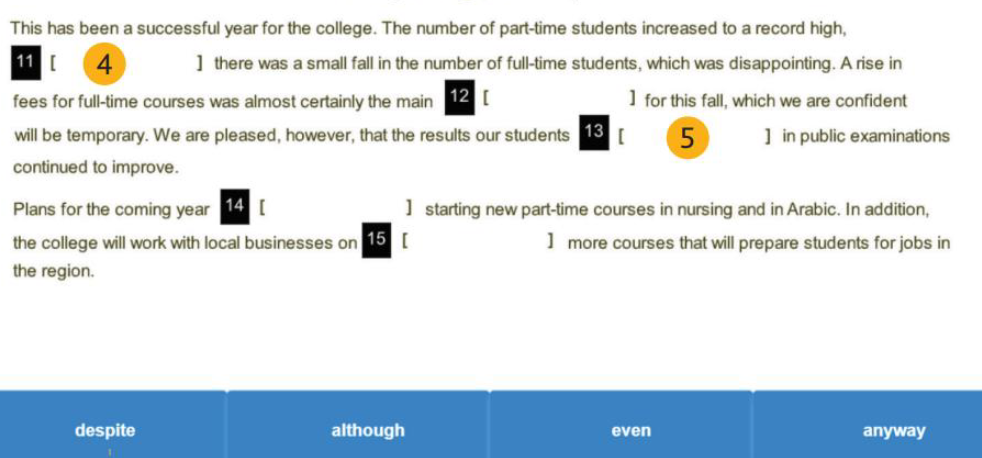
  • Multiple choice gap-fill (selecting from 3-4 options)
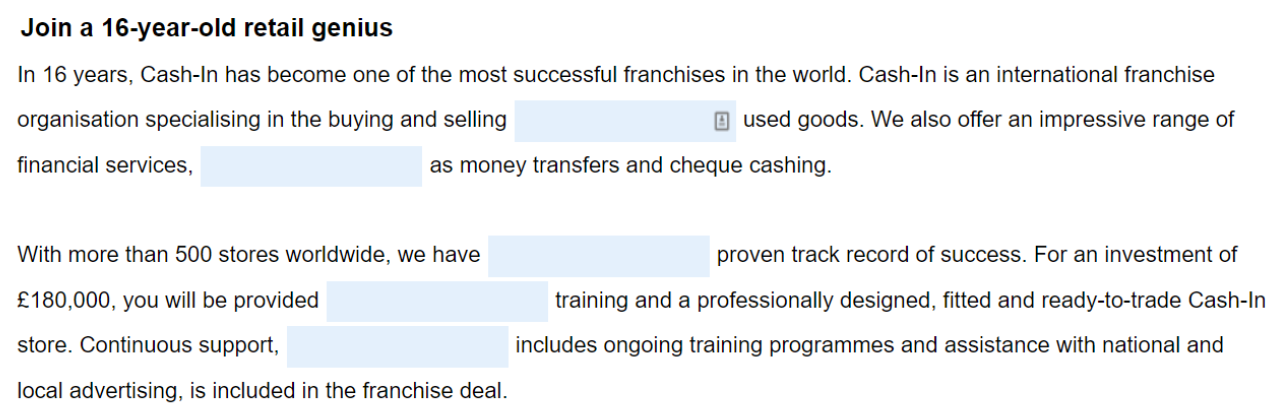
  • Open gap-fill (finding the correct word without suggestions)
Example of gap-fill with multiple choice

Multiple choice gap-fill

Example of open gap-fill task

Open gap-fill (find the word)

NEW Task Types:

  • Cross-text matching: Finding relevant information across four different texts to match specific questions or topics
  • Sentence gap-fill: Selecting the appropriate sentence to complete a text
  • Paragraph gap-fill: Choosing the correct paragraph to fill gaps in longer texts
Example of cross-text matching

Cross-text matching

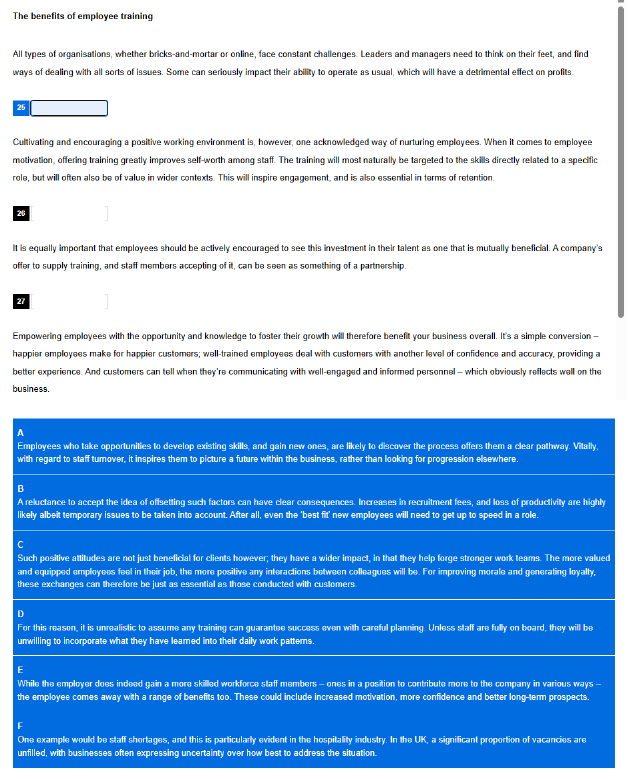
Example of sentence gap-fill

Sentence gap-fill

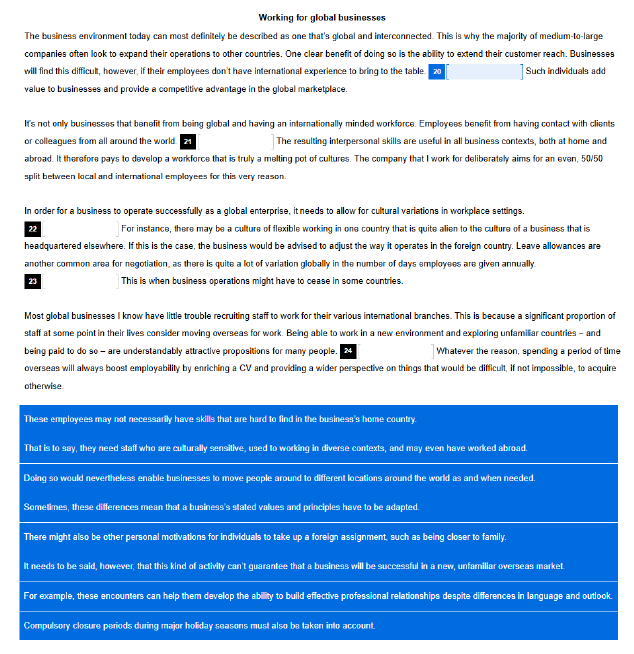
Example of paragraph gap-fill

Paragraph gap-fill

Listening (30-60 minutes)

The listening section is adaptive and includes at least 6 tasks. Each recording is played twice. Like reading, the test stops once your level is determined. Question types include:

Audio Formats:

  • Shorter recordings with one question each
  • Longer recordings with several questions in chronological order

Question Types:

  • Multiple choice questions (selecting the best answer)
  • Picture identification (choosing the correct image)
  • Comprehension questions about specific details
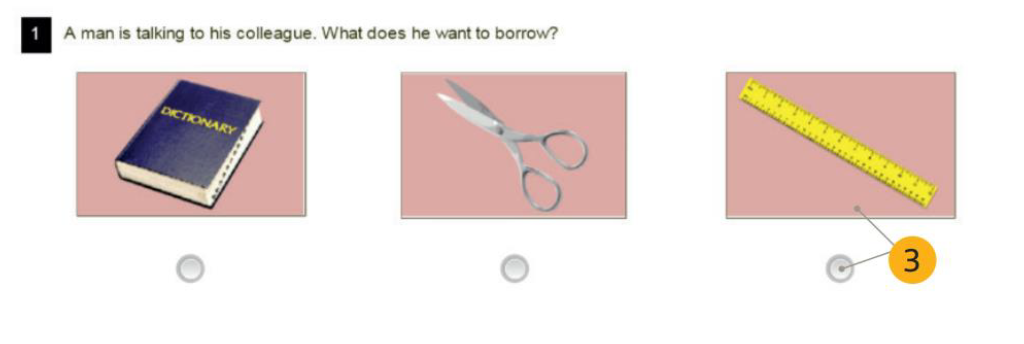
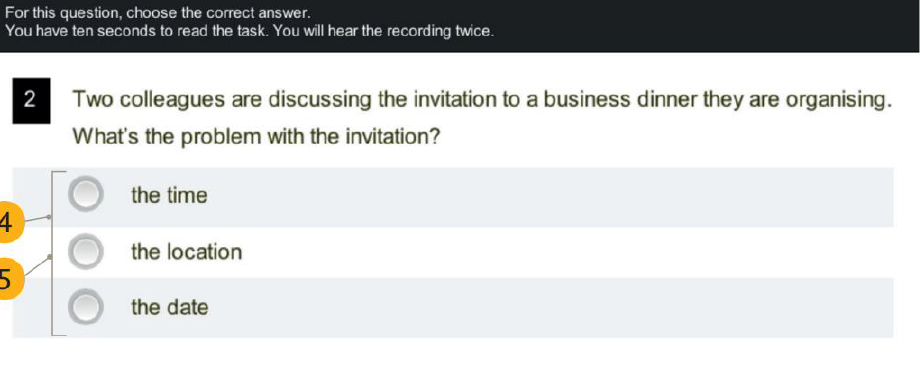
Example of shorter recording task with picture selection

Shorter recording - Picture identification

Example of shorter recording with multiple choice

Shorter recording - Multiple choice

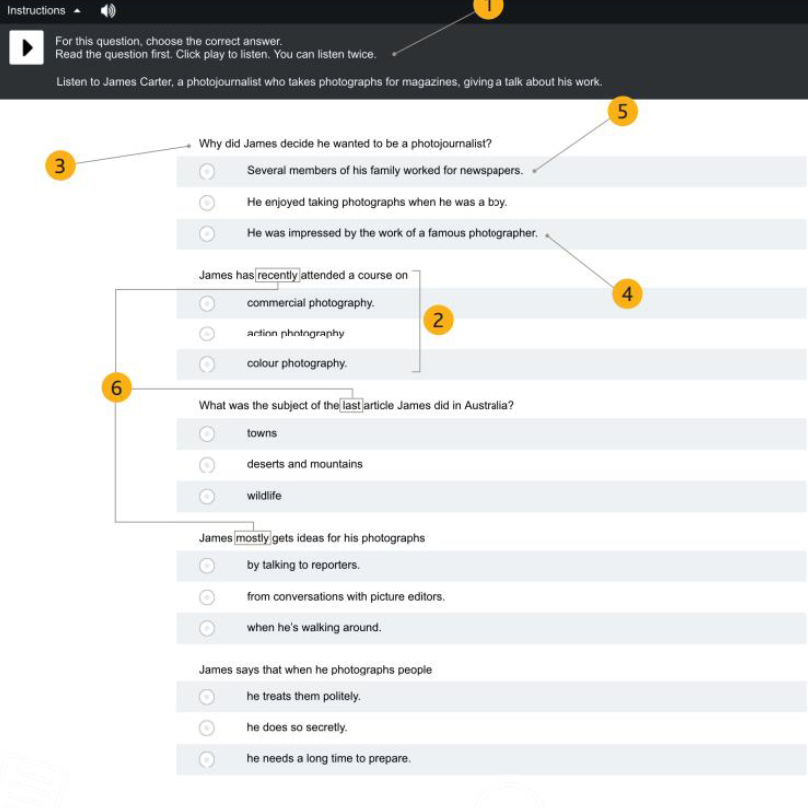
Example of longer recording task

Longer recording - Multiple questions

NEW Task Types:

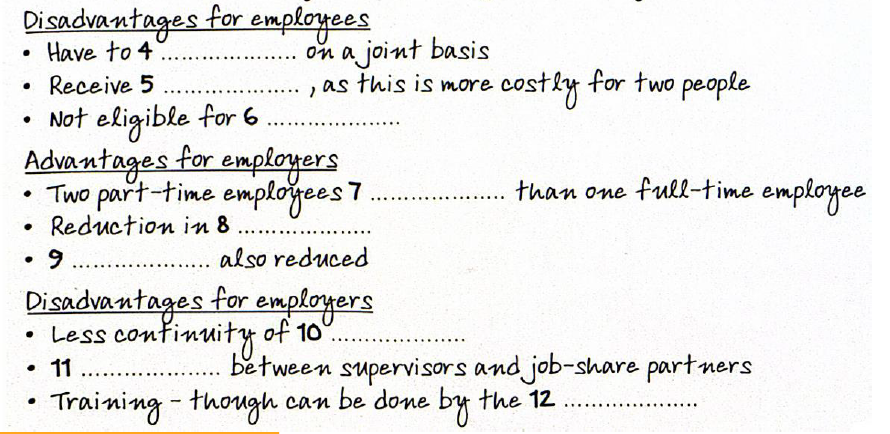
  • Note completion: Filling in 1-3 words in gaps within notes or forms
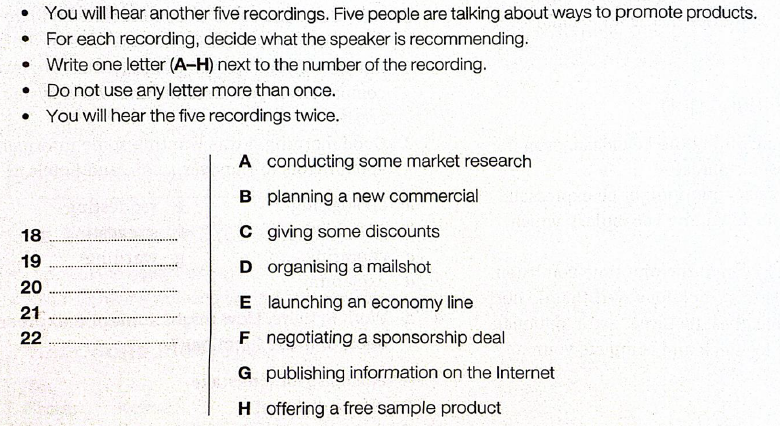
  • One-question multi-matching: Listening to five different speakers and matching each to their main idea from a list of options
Example of note completion task

Note completion

Example of multi-matching task

Multi-matching (5 speakers)

Reading and Listening Tutorial

Tutorial: Reading and Listening sections

Writing (45 minutes total)

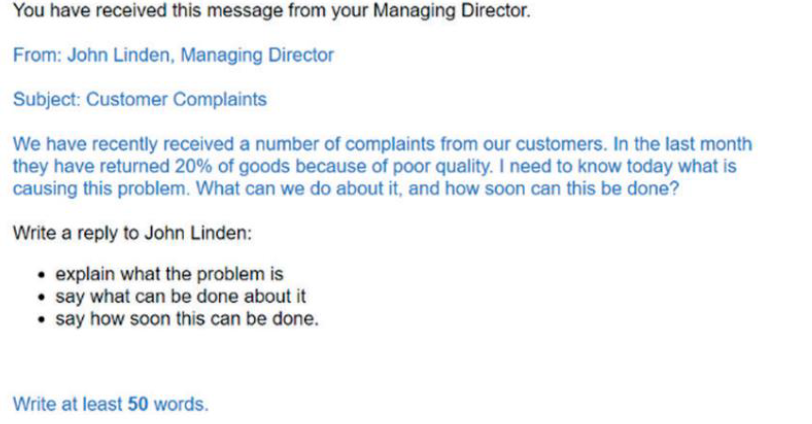
Part 1 (approximately 15 minutes - minimum 50 words):

Candidates receive a short email or message with three specific points to address. The task requires writing a response that incorporates information from the original message plus addresses all three prompts. This can be either formal or informal depending on the scenario.

Example of Writing Part 1 task

Writing Part 1: Short email response (50+ words)

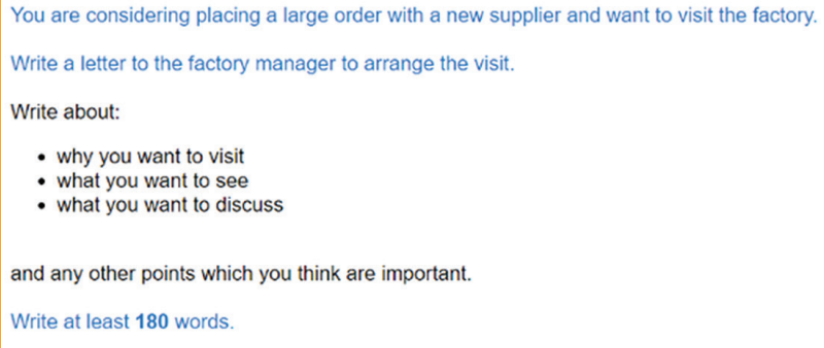
Part 2 (approximately 30 minutes - minimum 180 words):

Candidates receive a situation with context information and three main points to cover. Tasks may include writing:

  • A formal or informal email
  • A business report
  • A letter
  • A proposal

This section assesses the ability to structure longer written communications, use appropriate formal/informal language, employ linking words effectively, and present information clearly and professionally.

Example of Writing Part 2 - Letter task

Writing Part 2: Letter (180+ words)

Writing Tutorial

Tutorial: Writing section

Speaking (15 minutes)

The speaking section consists of five distinct parts assessing different oral communication skills:

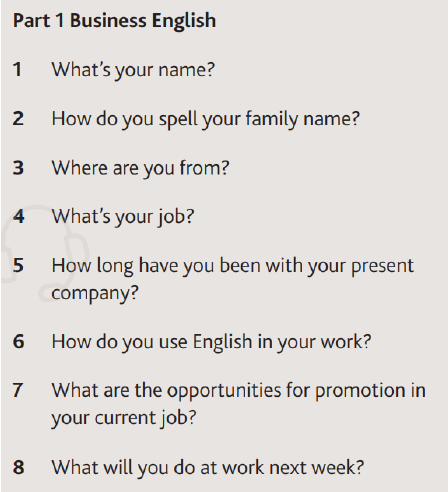
Part 1 (Interview Questions - 8 questions):

  • Questions 1-4: 10 seconds to respond each
  • Questions 5-8: 20 seconds to respond each
  • Topics include: personal information, work experience, studies, company background, future plans, hobbies, and English language use
Example of Speaking Part 1 questions

Speaking Part 1: Interview questions

Part 2 (Read Aloud - 10 sentences):

  • 10 seconds to read each sentence aloud
  • Assesses pronunciation, stress, rhythm, and intonation
  • Tests ability to parse and articulate written English naturally
Example of Speaking Part 2 - Read aloud task

Speaking Part 2: Read aloud (10 sentences)

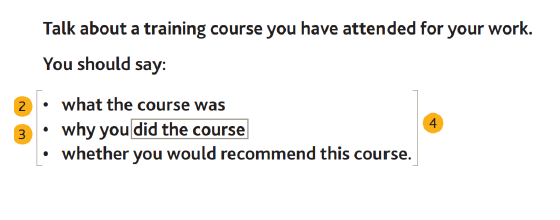
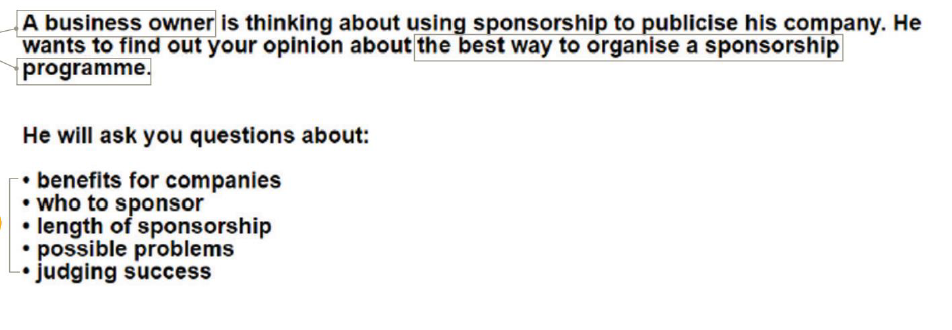
Part 3 (One-minute Presentation):

  • 40 seconds preparation time
  • One topic provided with three specific points to address
  • Candidates must structure a coherent one-minute presentation covering all points
  • Assesses organization, fluency, and ability to speak at length
Example of Speaking Part 3 - Presentation task

Speaking Part 3: One-minute presentation

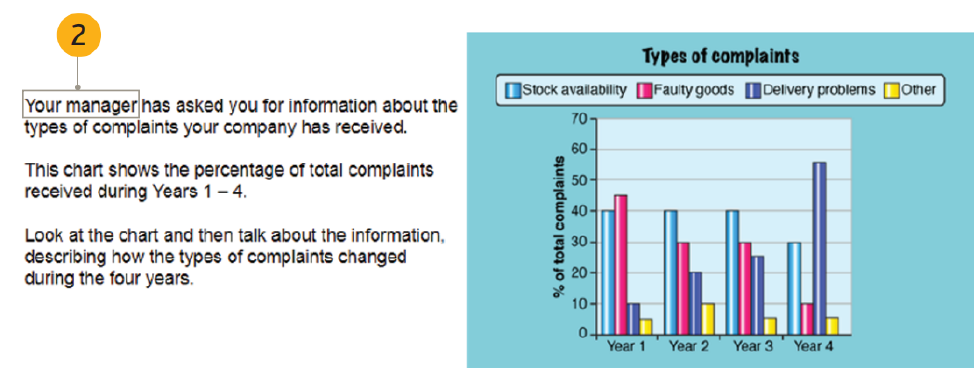
Part 4 (Graphic Description - One-minute):

  • 1 minute preparation time
  • Analyze and present information from one or more graphics (charts, diagrams, processes, graphs)
  • Tasks may include: describing data, comparing/contrasting information, making recommendations
  • Assesses ability to interpret visual information and communicate findings verbally
Example of Speaking Part 4 - Graphic description

Speaking Part 4: Describe and analyze a graphic

Part 5 (Extended Response):

  • 40 seconds preparation time
  • Receive a topic with key points about follow-up questions
  • Answer five questions about the topic (20 seconds per response)
  • Assesses ability to think quickly, provide detailed responses, and discuss topics in depth
Example of Speaking Part 5 - Extended response

Speaking Part 5: Answer questions on a topic

Speaking Tutorial

Tutorial: Speaking section

Scoring & Certification

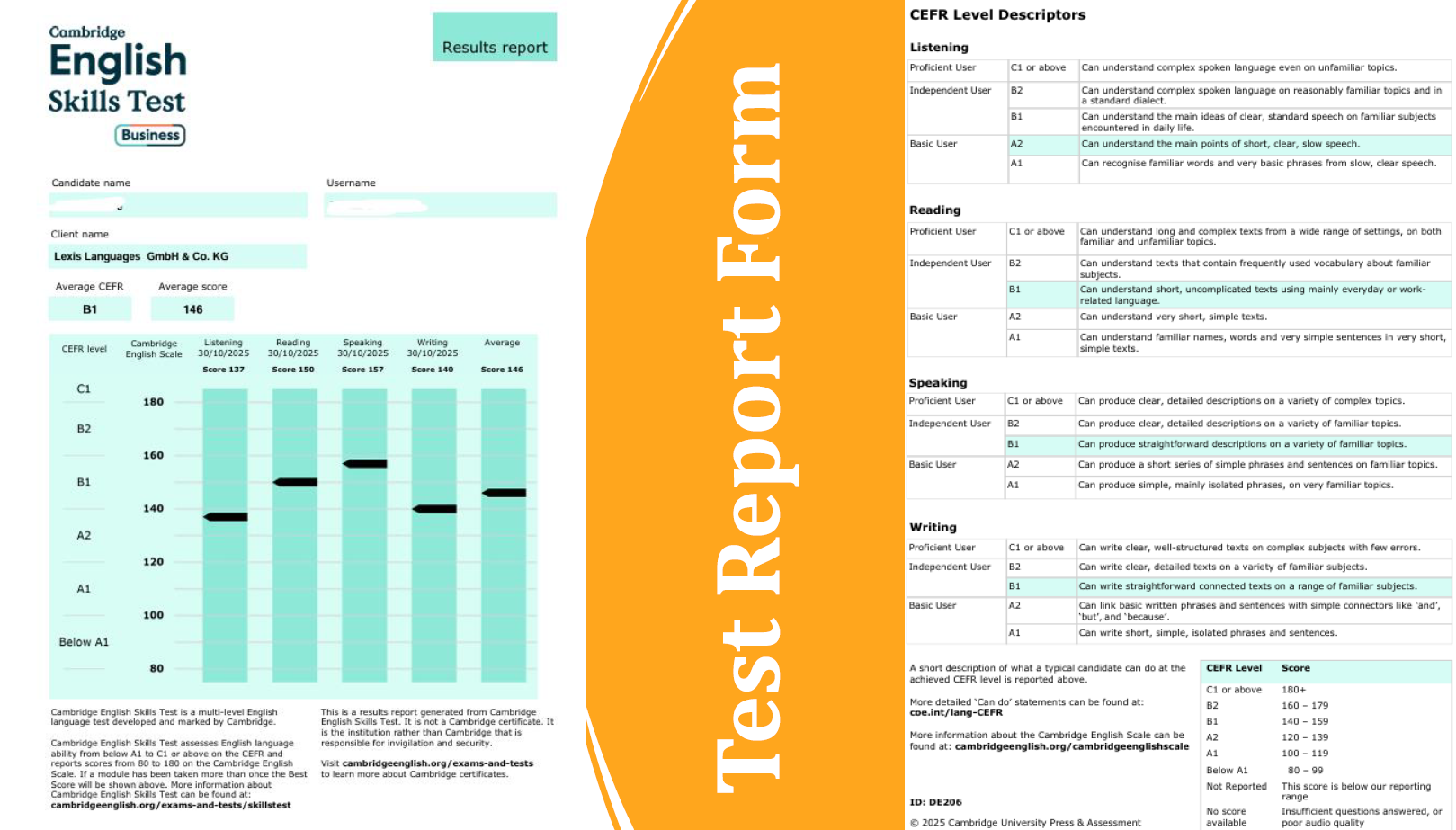
Results are provided on the Cambridge English Scale (100-200+) with corresponding CEFR levels (A1 to C1+). Each skill (Reading, Writing, Listening, Speaking) receives:

  • An individual score on the Cambridge English Scale
  • A corresponding CEFR level descriptor
  • An overall average score

The detailed test report includes:

  • Visual representation of scores across all four skills
  • CEFR level descriptors explaining what candidates can do at each level
  • Score breakdowns showing performance in each module

CEFR Level Ranges:

  • C1 or above: 180+ (Proficient User)
  • B2: 160-179 (Independent User)
  • B1: 140-159 (Independent User)
  • A2: 120-139 (Basic User)
  • A1: 100-119 (Basic User)
  • Below A1: 80-99
Example test report form showing CEFR scores

Sample test report with CEFR scores

Technical Requirements

To take the test, candidates need:

  • A computer or laptop with camera
  • Stable internet connection
  • Chrome or Edge browser
  • A quality headset with good microphone
  • Registration at least 2 weeks before the exam date
  • Adequate space for testing (if taken at company location)

Test Conditions:

  • AI proctoring through Talview surveillance technology
  • Complete screen sharing required during the test
  • Photo identification on test day
  • Login via email and password
  • Participants fill in their own registration data
  • Tests can be scheduled Monday through Saturday

Key Advantages

  • Adaptive Technology: Tests adjust to your level for more accurate assessment
  • Fast Results: Typically within 48 hours, often within 20 minutes
  • Flexible Administration: Can be taken at company locations or online
  • Comprehensive Assessment: Evaluates all four language skills
  • Detailed Reporting: Clear CEFR-aligned scoring with skill breakdowns
  • Secure Testing: AI surveillance ensures test integrity
  • Modular Options: Take all four modules or select specific skills to test

Reading Tests

B1

4 tests · Intermediate

B2

4 tests · Upper-intermediate

C1

4 tests · Advanced

Practice

13 skill types · B1 → C1

Short Reading

6 practice sets · A1 → C1

Listening Tests

B1

4 tests · Intermediate

B2

4 tests · Upper-intermediate

C1

4 tests · Advanced

Practice

4 skill types · B1 → C1

Cambridge English Skills Test

Practice Questions

Static

Skills Test▶▶

1

Put on your headphones
and click on Play Sound.

2

If you cannot hear the
sound, change the
volume on your device.

Click on Play Sound
again.

3

Once you are happy with
the sound, click on the
arrow at the bottom of
the screen.

Skills Test▶▶

You have finished the practice questions.

TEST RESULTS
Your Score: 0/26 0%
Instructions ▼
CAMBRIDGE SKILLS LISTENING TEST B1/B2

For this question choose the correct answer.

You have ten seconds to read the task. You will hear the recording twice.

1

Two colleagues are visiting an exhibition. Where do they arrange to meet later?

Instructions ▼
CAMBRIDGE SKILLS LISTENING TEST B1/B2

For this question choose the correct answer.

You have ten seconds to read the task. You will hear the recording twice.

2

Two colleagues are discussing the invitation to a business dinner they are organising. What's the problem with the invitation?

Instructions ▼
CAMBRIDGE SKILLS LISTENING TEST B1/B2

For this question choose the correct answer.

You have 45 seconds to read the task. You will hear the recording twice.

Interview with Bob Dacre, CEO of a waste recycling business

3

Bob Dacre says most of the waste his company deals with now comes from

4

Dacre says he visited some of the waste recycling sites to

5

What did Dacre discover about the waste bins his company collects?

6

Dacre thinks one public recycling site had been successful because

7

At an older waste recycling site that Dacre visited, he was unhappy that

8

As a result of his visits, Dacre wants to talk to the Board about

Instructions ▼
CAMBRIDGE SKILLS READING TEST B1/B2

For this question, choose the correct answer.

Instructions ▼
CAMBRIDGE SKILLS READING TEST B1/B2

For this question, choose the correct answer.

Because of the increase in demand they decided to take 10 more staff.

Instructions ▼
CAMBRIDGE SKILLS READING TEST B1/B2

Click on each gap then choose the correct answer.

Instructions ▼
CAMBRIDGE SKILLS READING TEST B1/B2

For these questions, type the correct answer in each gap.

Type only one word in each gap.

When you meet your client face to face, it 16 highly likely that you will discuss several topics in a short time. If you discuss topics one by one, your client will clearly understand 17 you want to say. You should not speak 18 quickly that your client cannot follow. Sometimes, it may prove to be considerably more productive to listen 19 to speak. Give your client your full attention by closing your office door and turning off your phones and computer. Do whatever you can to make sure that you are not interrupted 20 the course of your conversation.

Instructions ▼
CAMBRIDGE SKILLS READING TEST B1/B2

For these questions, choose the correct answer.

AN ENTREPRENEUR'S PLANS FOR A BANQUETING HALL

RPC, the food importing and processing business based in the north-west of England, is on target to hit sales of £50 million this year, up from £45 million last year. RPC has a number of other businesses including Tolleys, which sells meat wholesale in the UK and the USA. The group's combined turnover is expected to top £110 million this year. RPC is owned by entrepreneur Richard Crawford and his brother, Philip.

Richard Crawford also owns the Fragrance restaurant, which is expected to have a turnover of £2 million this year, an increase from £1.2 million last year. Crawford admitted that the restaurant was quiet at lunchtime during the week but very popular in the evening and at weekends. Crawford opened the restaurant two and a half years ago and says that, according to the business plan, it should begin to make a profit next year.

However, Crawford is not content to leave the restaurant as it is and has big plans for the future. He is now investing more than £2 million in a new banqueting hall. He says that the hall will create at least 50 new jobs and will cater for up to 800 people when it opens in June. His aim is mainly to attract large wedding parties but he would also welcome bookings for major corporate gatherings and cultural events such as art exhibitions. The banqueting hall will be on the currently empty ground floor beneath the Fragrance restaurant.

Crawford made the decision to open a banqueting hall after he had to turn down several events which had requirements to seat 800 people. He says, 'In Fragrance we can cater for 400 people but not for 800. Some people say there is no real demand for banqueting halls of this size but I'm sure they are wrong. Hotels are missing out on these kinds of events as so few of them have seating for more than about 500 people. We feel that we are in the right place for hosting these large events; we even have an extra advantage in that we have parking space for hundreds of cars, “ and it's free.'

Crawford believes that his venture will be a success. 'If we have, say, 2,000 people per week in the hall, the turnover could be in excess of £200,000. We don't need to build a new kitchen as the one at the Fragrance restaurant can easily be extended; and the food and the Fragrance brand are already well established, so that should draw people and organisations in.'

Terry Craven, an expert on mass luxury catering, said that 800-seater venues were rare in the North-West, and if the hall had a unique design, Crawford could make a success of it. He added, 'If it's at the top end, if the food and beverages are good and if it's a special design, it should be successful. People hosting corporate events want something unique and different. Crawford has made a success of the Fragrance restaurant and his other businesses so I'm sure it will be the same with his banqueting hall.'

21

What do we learn about RPC in the first paragraph?

22

According to the second paragraph, the Fragrance restaurant

23

What does the third paragraph tell us about the banqueting hall?

24

According to the fourth paragraph, a problem for hotels that host events is that they

25

According to the fifth paragraph, what does Crawford think will help to make the banqueting hall succeed?

26

Terry Craven thinks that the banqueting hall will be successful because

Writing Tests

Each test is 45 minutes long and has two writing parts. Your work saves as you type and submits at the end. To get automatic feedback and a score on your writing, an AI assistant needs to be connected. You can set this up in Settings. Without it, your work is still saved so you can read it back.

B1

4 tests · Intermediate

B2

4 tests · Upper-intermediate

C1

4 tests · Advanced

Speaking Tests

Each test has five parts: about you, read aloud, long turn, communicate, and present. Your voice is recorded in the browser. To turn your recordings into a transcript and get an automatic score, a speech assistant and an AI assistant need to be connected. You can set both up in Settings. Without them, your recordings are still saved so you can play them back.

B1

4 tests · Intermediate

B2

4 tests · Upper-intermediate

C1

4 tests · Advanced

Practice

5 skills · B1 → C1

Grammar

Basics

12 topics

Prepositions

3 topics

Pronouns & Questions

7 topics

Present Tenses

3 topics

Past Tenses

6 topics

Present Perfect

6 topics

Future Forms

4 topics

Passive & Reported Speech

3 topics

Nouns, Adjectives & Adverbs

6 topics

Modals & Conditionals

4 topics

Mixed & Advanced

2 topics

Grammar Blitz ⚡

Random sentence correction

Vocabulary Practice

Your recent vocabulary practice

Loading…

1 / 0
KNOW
0

DON'T KNOW
0
Q 1 / 10
Score: 0
0 / 10

0 words

Upload Vocabulary from Excel

Your Excel file should have two columns:

Column AColumn B
Word / phraseDefinition or translation
archiveArchiv
invoiceRechnung

The first row can be a header — it will be skipped automatically if it contains no translation.

📂

Drag & drop your .xlsx file here

or

User vocab sets

My sets

Sets you've uploaded. Sharing makes them visible to other users; deleting removes them for you and everyone you've shared with.

Loading…

Shared with me

Sets other users have shared with you (directly, or via a group you're in).

Loading…

Progress/Results

Your Dashboard

Your Progress

Tests Completed 0
Average Score -
Last Activity -

Quick Start

Recent Activity

No recent activity

Skill radar

Grammar radar

AI weakness analysis

Sends your wrong answers from recent tests to the AI provider configured in Settings and returns 2–3 concrete things to work on.

Test History

Date Test Type Score Time Actions
No test history available

Participants

Add, edit, and remove trainers, class groups, and students.

NameStatusCreatedActions
Loading…

Group View

The groups you've been assigned to. Click a group to see its students.

Loading…

Writing homework

Writing submissions that your students have sent for review. Click a row to expand the text.

Student Test Sent Score
Loading…

Check Progress

Each group you teach, with its overall stats. Click a group to see per-student progress.

Loading…

Company Progress

Your company's groups and how each cohort is progressing. Click a group to drill into per-learner detail.

Loading…